
Silfra: Dive or Snorkel?
Compare Silfra scuba and snorkeling by qualifications, gear, group arrangements and the full visit. Check documents and fit before choosing.
Compare the activity requirements
Scuba requires the park qualification and dry-suit proof. Snorkeling is a surface activity with its own conditions. Both need suitable gear and a complete arrival plan.
Compare the activity requirements
Decision: Position
- Snorkeling
- Surface view into the fissure
- Scuba diving
- Below-surface view within the guided route
Decision: Qualifications
- Snorkeling
- No scuba certificate in the checked products; swimming and other conditions apply
- Scuba diving
- Autonomous-diver qualification plus accepted dry-suit proof
Decision: Suit rule
- Snorkeling
- Suitable full cold-water protection; park allows dry suit or suitable thick fitted wetsuit
- Scuba diving
- Dry suit required by the park
Decision: Booking task
- Snorkeling
- Age, fit, forms and arrival
- Scuba diving
- Qualification proof, forms, fit and arrival
Park rules and named operator product pages; links in article · · © thingvellirnationalpark.com.

The Silfra dive or snorkel choice depends on training as well as the view. Snorkelers remain at the surface. Scuba divers descend with breathing gear and must meet the park's scuba and dry-suit rules. Do not book a dive as a first lesson. Compare snorkeling on its own terms instead.
TL;DR: Choose the activity you are qualified for, then check fit and forms. Snorkeling has swimming and operator conditions too. Compare the full visit and transport plan, not just the minutes spent in water.
Last fact checked: 14 October 2026. This compares the stated rules and visit formats. It is not a personal test or diving lesson.
Silfra dive or snorkel: how the views differ
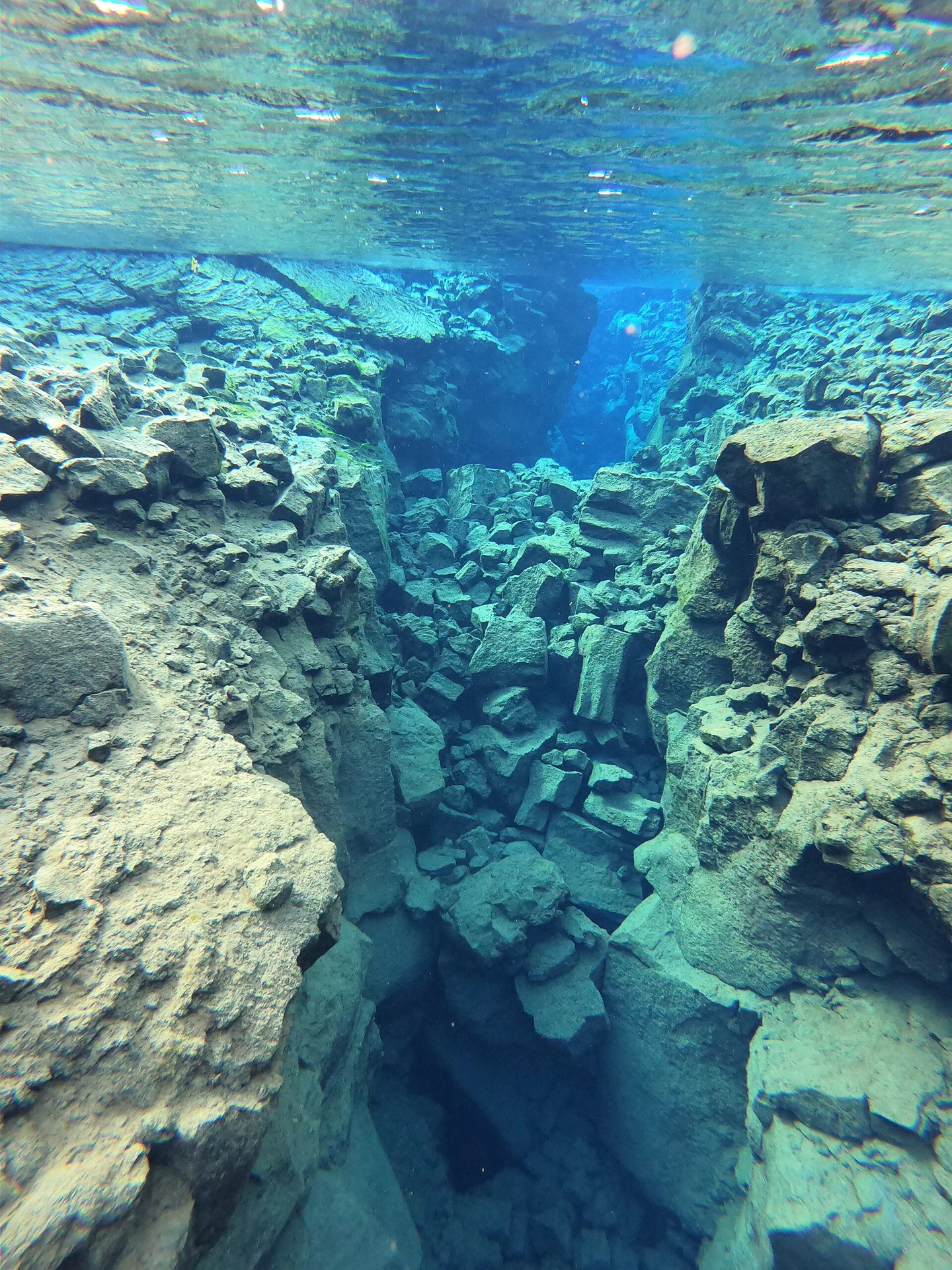
Both activities use the water-filled fissure. They put the visitor in different positions. A snorkeler looks down from the surface.
A scuba diver can view the rock forms below the surface. The view stays within the allowed guided route. They are distinct activities. One is not simply a longer version of the other.
Clear water is central to Silfra's appeal. It allows a view into the fissure without needing to descend to every visible feature. You can see that water view while snorkeling. You do not need to be a trained dry-suit diver for that surface activity. It is still a cold-water activity, rather than a casual swim.
Do not choose scuba because you assume the surface view is incomplete. Decide what you want from the visit and what you can take part in. A different viewpoint may be attractive to a trained diver. It does not create a reason to bypass the training rules.
Use the park's Silfra account for the fissure's setting. Tour descriptions often use a simple “between the continents” phrase. Our tectonic plates guide explains the wider rift system. It is more complex than two edges beside a visitor.
Silfra dive or snorkel: qualifications come first
The official park rules require an autonomous-diver qualification for scuba. They also require dry-suit certification or accepted written proof of recent dry-suit dives. The other proof covers ten registered dry-suit dives within the last two years. An instructor from a recognised diving organisation must confirm them.
A scuba card is one part of the proof. It does not settle the dry-suit requirement. A memory of dives is not the stated written proof.
Check both parts before choosing a product. Ask the operator to review the required records. Do not assume that a booking form has accepted them.
The park rule is the starting point. The actual operator can impose further conditions for its product. DIVE.IS's Silfra diving tour lists its required qualification and proof, along with forms and gear conditions. Read the whole list, not only the qualification heading.
You may lack the required background. If so, do not treat the site as a place to try scuba without it. DIVE.IS describes a separate training package. That is a distinct product to enquire about, with its own prerequisites and time needs. It does not remove the conditions on an ordinary Silfra dive.
Snorkeling does not require a scuba certificate in the checked guided products. That narrower statement does not mean there are no rules. The operators require swimming ability and suitable fit. Their forms and age rules also apply. The snorkeling overview compares the named formats after those checks.
Equipment and comfort are separate from certification
You may meet the dive rules. That does not guarantee the gear fits or the activity suits you that day. The park requires divers to use a dry suit. The operator must fit the actual equipment and complete its checks. Read its size chart before arrival, especially if you are near a published limit.
For snorkeling, the park permits a suitable thick, fitted wetsuit as well as a dry suit. The checked guided choices describe dry suits. Do not assume that changing from scuba to snorkeling automatically gives you a wetsuit option. Ask about the actual product's gear.
DIVE.IS's equipment guide sets out supplied layers and gear. It asks guests to bring suitable base clothing. A dry suit is only part of the system. Clothing beneath it and the protection for head and hands also matter.
Some areas can get wet despite the dry-suit name. Hands and parts of the face are not protected in the same way as the body. Leakage is also possible. Do not equate either activity with complete dryness or a promise that you will feel warm.
If tight gear is a concern, raise it before booking. That is useful for both activities. A person can be confident in water.
The same person may dislike a neck seal or restricted movement on land. The operator must handle fit and the briefing. A web comparison cannot solve that concern for you.
The wetsuit versus drysuit guide keeps park permission separate from the gear the products describe. Use it for the enquiry, then follow the selected operator's exact instructions. Do not buy or bring equipment based only on a generic chart here.
Forms are part of both choices
Read the form for the chosen operator. Do this before choosing either activity. Some responses trigger a further step under its process. The park notes medical screening for operator guests. This page cannot decide whether a health condition allows a visitor to take part.
Use the form for the activity you actually book. A snorkeling form and a diving form may ask different questions. Approval for another trip may not meet this operator's document requirements. Ask which record it needs and how to submit it.
Do not infer eligibility from a tour being sold online. The calendar can show a departure while your own documents remain unresolved. Completing payment is not a waiver of the conditions. Keep any product-specific reply with the booking.
A guest may be unsure about fitness or swimming ability. Resolve that concern through the supplier's stated route. Use that route for unclear form checks too. Do not choose the other activity simply to avoid answering. A land visit remains a different plan with its own walking and access needs.
Depth and route limits do not define a challenge
The park sets a maximum diving depth of eighteen metres. It prohibits caves and other overhead environments. That is a rule, not a target that a guide must reach. A site account can name many deep features. Do not assume your group will visit all of them.
The fissure's physical depth and the depth permitted for an activity are different questions. A statement about a deeper section does not authorise a visitor to go there. The same applies to a photograph. It may seem to show a route beyond the normal open area.
A snorkeler can look toward deeper rock from the surface. That depth is not part of the surface activity. Avoid comparing the choices by the largest number in a description. A greater site depth is not evidence of a more complete guest experience.
Follow the booked guide's route and current site restrictions. This comparison does not teach descents, buoyancy control or how to use diving systems. Those belong to the required training and the operator's briefing, not a sightseeing article.
Compare the full time at the site
Water time is only one part of either booking. Check-in, documentation, fitting and the briefing come before entry. There are walks and changing tasks afterward. A road plan based on the shortest quoted water time leaves out much of the visit.
DIVE.IS publishes full-visit estimates on its scuba page. Its snorkeling page has its own estimate. It also distinguishes self-arrival from a Reykjavík transfer. Use the selected product's estimate. Do not take a figure from snorkeling and apply it to scuba because both use Silfra.
Build in room for the arrival chain. Guest parking is separate from the company meeting area in the named examples. You then need time to walk to check-in. The meeting-point guide explains that distinction with the operator's own links.
Plan another park walk as a separate task. You may want the assembly grounds before or after the activity. Give those interests their own time. Reading signs takes longer than passing a photo point. If time is tight, choose one useful land route rather than adding every landmark.
Ask how a change at the water entry could affect the rest of the day. Do not promise yourself a fixed finish at another attraction from a broad activity estimate. Keep transport deadlines and booked meals realistic. The operator should explain the format's timing limits.
Transport comparison
Self-arrival can suit visitors with a car who want to shape the surrounding land day. It puts the road and check-in plan on them. They must use the stated guest parking and check current road conditions. They also need to reach the right company's meeting area on time.
Pickup can suit a visitor who wants the operator to handle the road leg. It adds a fixed meeting in Reykjavík and ties the day to the return format. Check the named stop and whether it serves your accommodation plan. A rural hotel is not automatically a city pickup address.
The two activities may offer different departure options. Verify the actual product rather than treating a supplier's general transfer description as inclusion in every tour. Ask about any minimum passenger condition if you depend on transport.
If one person drives and others use pickup, ask how the group meets at the site. If everyone hopes to return together, check that too. A shared destination does not merge two transport bookings into one. Save the agreed plan so each guest has the same instructions.
For an overnight base, use the park-area hotel guide to compare the route. A nearby stay may reduce one drive yet complicate a city transfer. Choose the activity and accommodation as a workable pair.
Mixed groups need their own check
A party can contain qualified divers and people who want to snorkel. That does not prove they will enter the water together or share a guide. Arctic's checked sources describe separate diving and snorkeling groups. Those groups can use the same site without entering together.
Tell the operator the actual mix before booking. Ask about check-in, water entry and the expected finish for each group. If a parent must accompany a child, confirm whether that adult can do a different activity. Do not assume a nearby diving group meets a snorkeling guardian rule.
DIVE.IS's diving page describes its guide ratio. It notes that some couples in a larger party may have to split between groups. It offers another format for a buddy pair.
You may want to stay with a specific person. Ask about that on the selected product. Do not infer it from the total booking size.
People waiting on land need a plan too. Ask where they can wait and which facilities are available. Do not assume an operator watches children or holds a place indoors for every spectator. Make those arrangements before the participating guests enter the activity.
What to compare in the package
Check the named operating supplier and the exact activity. A booking-site label can be broad. Look past the label to the named activity and supplier. Confirm whether you are buying snorkeling, scuba or a separate course package. The inclusion of a dry suit does not tell you which activity it is.
Then compare the total visit format. Ask about gear and required clothing. Check whether transport, site admission and photographs are included or separate. Avoid judging value from the headline amount while leaving the arrival option uncertain.
Read cancellation terms for the selected route. A guest cancellation, late arrival and missing qualification may be treated differently. Ask what happens if only one guest in a mixed party cannot take part. A group booking does not guarantee one shared outcome for all of them.
No personal testing or price ranking is used here. Our comparison follows the stated rules and the planning task. A route with fewer training checks is not the best fit for every guest. The right enquiry starts with what each person can meet.
Choose the right enquiry
For a trained diver, start by sending the qualification and dry-suit proof requested by the actual supplier. Ask it to confirm what it needs for the selected date. Then resolve forms and fit before comparing transfers or extra activities.
For a swimmer considering snorkeling, start with the operator's age and size rules. Read the form and equipment instructions. Ask about any issue at a boundary. Our age-limit guide explains why one minimum age cannot answer every family case.
For a party uncertain about either route, plan a land alternative. The park overview offers history and visible geology without requiring a water booking. You can still read the fissure's setting through the wider rift landscape.
Settle those questions first. Then compare the named Silfra snorkeling formats for guests choosing that activity. Seek the right transport and clear gear terms. That is a better enquiry than choosing a product only for its most dramatic photo.
Frequently asked questions
Is snorkeling a beginner scuba dive?
No. It is a surface activity with a different system and operator conditions. Scuba requires the park's stated qualifications and dry-suit background. Do not treat one booking as interchangeable with the other.
Can I decide at the meeting point?
Do not assume a switch is possible. Equipment, documents and group scheduling differ. Ask before booking if you are unsure. The operator must explain whether another product is available and what requirements it brings.
Is the deepest part the best reason to dive?
Choose by training, the guided route and the experience you want. The park's depth limit is not a target or a promise. A site description can mention deeper rock without making it part of your activity.
Can divers and snorkelers stay together?
They may use separate guides and schedules. Ask about the selected tours and the actual party. For a child's adult-accompaniment rule, get a specific answer rather than assuming that being nearby is enough.
Verdict on Silfra dive or snorkel
Make the Silfra dive or snorkel choice from qualifications first. Confirm the documents and fit, then compare the whole visit and transport. Snorkeling can give a surface view of the fissure, but still has participation rules. A land route is a useful alternative when neither water product fits the party.