
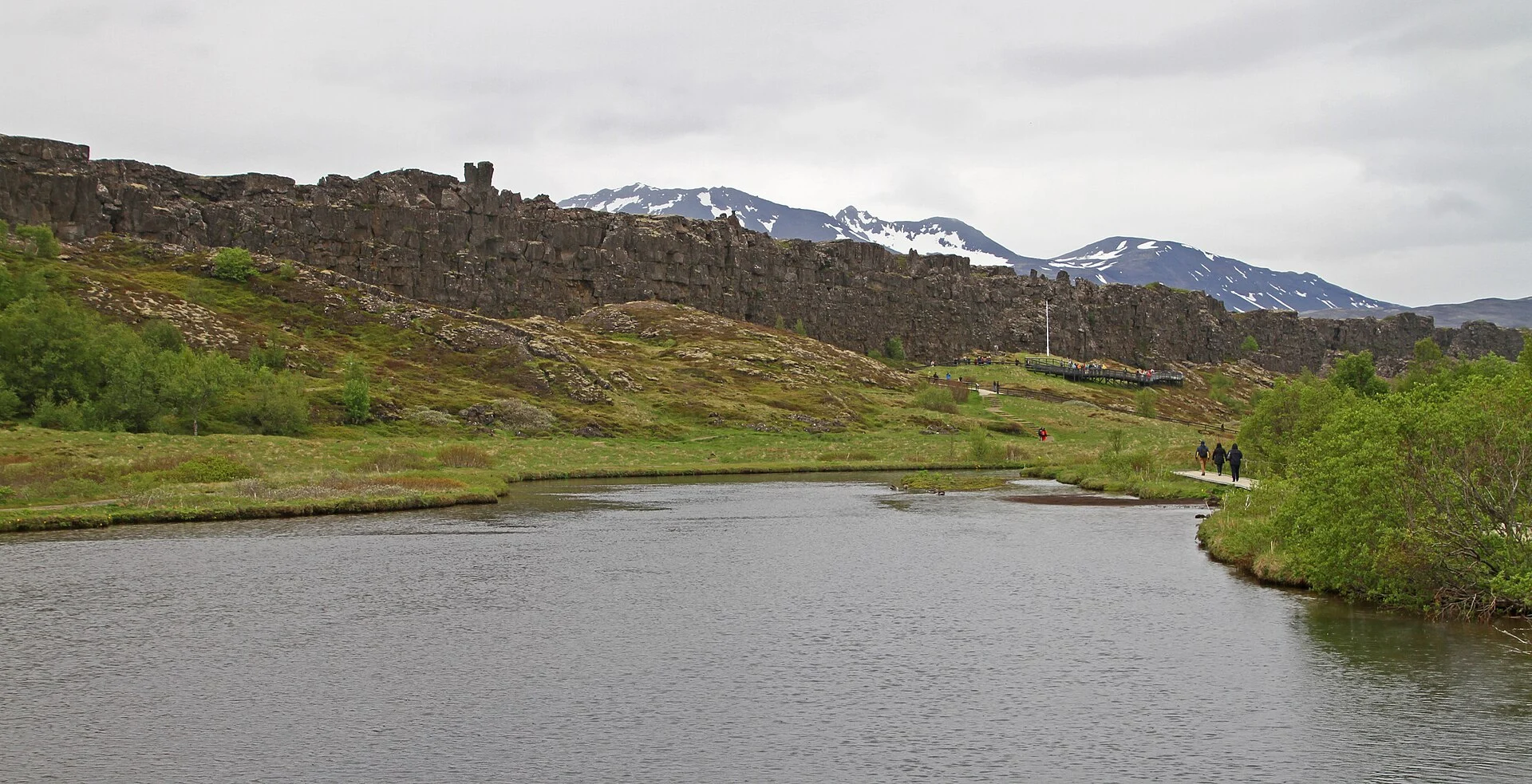
Althing Thingvellir: Assembly History and Visit Guide
Follow the Althing story through a sourced timeline, Law Rock interpretation and booth remains. Distinguish the old assembly from modern markers.
Assembly-area timeline
The timeline separates the first assembly, religious change, later authority, final site meetings, today's church and World Heritage recognition. Modern markers do not prove exact early locations.
Events with their context
Date: 930
- Event
- Alþing established
- What it means on a visit
- An outdoor assembly, not today's church
Date: 1000
- Event
- Adoption of Christianity
- What it means on a visit
- Beginning of the church tradition in the account
Date: 1262
- Event
- Allegiance to the Norwegian king
- What it means on a visit
- A later system of authority
Date: 1798
- Event
- Last assembly meetings at the site
- What it means on a visit
- UNESCO's stated end date for meetings here
Date: 1859
- Event
- Present church built
- What it means on a visit
- Later than the early assembly
Date: 2004
- Event
- World Heritage inscription
- What it means on a visit
- Recognition of the cultural site
UNESCO and Þingvellir National Park's history pages · · © thingvellirnationalpark.com.
The Althing Thingvellir site tells the story of an early assembly. Start with that history, then look at the grounds.
The Althing at Thingvellir was an outdoor assembly, not a parliament house whose rooms you can visit today. Its story is spread across the Law Rock account, the council site and low booth remains beside the water. Knowing what each feature represents makes the walk easier to read, especially where little survives above the grass.
Start with the assembly's purpose, then use the signed grounds to connect the story to the place. The Alþing began here in 930 and met at Þingvellir until 1798. The exact original position of Lögberg is debated. Visible booth ruins are not all from the first assembly period. Today's church and flagpole help you find the way, but they belong to later dates.
Last fact checked: 14 October 2026. Historical account comes from the park and UNESCO, not personal re-creation.
Althing Thingvellir: read the assembly grounds
The Alþing brought together participants from across Iceland to make laws and hear disputes. It met in the open air. People needed space to gather, places to stay during the session and access to water. Those needs explain why the site extends beyond the modern Law Rock marker.
UNESCO's World Heritage record dates the assembly's foundation to 930 and its last meetings here to 1798. It sets out the remains of turf-and-stone booths as part of the remaining site. These are physical traces of the gathering, rather than a complete set of buildings from its earliest years.
Do not project the layout of a modern elected parliament onto the old grounds. Laws, courts and public speech had distinct functions. The Law Rock and Law Council were not two names for the same thing. A walk makes more sense when you read the different tasks first.
The park's Law Council account explains the body that dealt with laws. Its Law Rock page explains public notices and the Law Speaker. Read these as distinct parts of one assembly, rather than try to find a single “parliament building.”
A sourced Althing Thingvellir timeline
The reference below uses dates from UNESCO and the park's history pages. It selects events that help visitors read the site. It is not a full history of Iceland. Modern buildings do not prove where an earlier event took place.
- 930: the Alþing was marked at Þingvellir. The gathering took place outdoors.
- 1000: the assembly adopted Christianity, in the park's account of the conversion. This helps explain the long church tradition at the site.
- 1262: allegiance to the Norwegian king changed the earlier system. The park links this to the loss of Lögberg's former function.
- 1798: UNESCO gives this as the final year in which the assembly met at Þingvellir.
- 1859: the present church was built. It is not the first church on the meeting grounds.
- 2004: Þingvellir was inscribed on the World Heritage List for its cultural associations and remaining remains.
Sources: UNESCO, the park's Christianity account and Lögberg account, checked October 2026.
Treat the timeline as a way to distinguish periods. The assembly began long before the present church. Later legal punishments at the site do not describe every period of the Alþing. The World Heritage listing is later again, and recognises the remaining cultural place rather than recreating the assembly.
Lögberg and the Law Speaker
Lögberg means Law Rock. During the Commonwealth period it was a place for public speech and the proclamation of laws. The Law Speaker recited laws aloud and announced procedural rules. The setting was an outdoor gathering, so the act of speaking and listening mattered to its function.
The park's Lögberg page says the exact location remains debated. It names possible positions near the slope called Hallurinn and within Almannagjá. The modern flagpole is a useful point of direction, but it does not remove the source's uncertainty.
That caveat need not spoil the visit. Look across the meeting area to see the setting for public speech. You need not claim to stand on one proven spot. Read the signs for the old function, then use the wider view to place it among the council grounds, water and booth remains.
Avoid confident captions such as “the exact rock where every law was spoken.” They go further than the park's account. “Lögberg area at Þingvellir” is a better account for a photo when the evidence does not fix the old position beyond doubt.
The meeting grounds and booth remains
The park's assembly-site account sets out an area bounded by faults, the lake and lava features. People gathered across those grounds. The river Öxará provided water, while booths gave attendees places to stay during the session.
Today, some remains appear as low, grass-covered outlines. They can be easy to miss if you expect high stone walls. Do not judge a ruin's date from its height or how old it looks. Erosion, reuse and vegetation affect what you can see.
The official account distinguishes two visible ruins linked with the Commonwealth period: Njálsbúð and Biskupabúð. It says other visible remains date from later centuries and may sit over older booths. That matters when a guide or caption labels every outline “Viking.” The site contains evidence from more than one period.
Look from the path and use the account. A grass mound is not an invitation to climb onto a historic trace. Nor should you move stones to make a photo look clearer. Look for what survives in place. Some parts are small or partly covered.
What survives and what is later
The present Thingvellir church is a later building within the old assembly setting. The park dates it to 1859. The nearby houses are also later than the earliest assembly. Their presence helps you find the area but does not make them original meeting stay.
The ground itself has not stood still. The park sets out land subsidence and flooding as reasons for moving the Law Council from its earlier position. This means that a visitor map shows today's terrain. It cannot reproduce every shoreline, watercourse or meeting place from the tenth century.
Read our tectonic plates account for the process behind the rift valley. Keep that natural history distinct from claims about where people gathered. A fault can explain the terrain while written records and old remains explain the assembly.
The drowning pool belongs to the site's later legal history. It should not stand in for the whole Alþing story. The park specifically distinguishes enforcement during the Commonwealth from the more severe punishment system that followed. That distinction prevents a visit from collapsing many centuries into one account.
Plan a respectful old meeting area walk
Use the park's latest map and signs to choose the route. Start from an arrival point that suits your walking needs, then keep a short list: the Lögberg account, council grounds, booth remains and church exterior. Add the river and lake context without making unmarked ground part of the route.
If an interior church visit matters, check its summer access separately. For a ranger walk, check the latest programme. An old summer notice is not a live schedule. Our Thingvellir tours comparison separates those ranger walks from paid excursions with transport.
Bring enough time to stop at signs. Fast walking between photo points can leave you with the names but not the relationships. A short, careful route may be more useful than covering every feature without reading its account.
For an overnight stay, use the hotel comparison to check the base against the next day's route. Return to the park overview for the wider visit. The history walk is one part of the park, and you can give it its own time without booking every activity.
Frequently asked questions
Is there an old parliament building to enter?
The early Alþing met outdoors. The site contains meeting grounds and booth remains rather than an intact parliament house from its founding period. The present church and adjacent buildings are later. Use the park's signs to distinguish their dates and functions, rather than treating each building as part of the original gathering.
Is the exact Law Rock location known?
The park sets out more than one possible location and says the exact old position remains debated. A modern flagpole helps visitors find the interpreted area, but it does not settle that question. You can still read the Law Rock's public function from the source without making a claim about one exact spot.
Are all the booth remains from the Viking Age?
No. The park distinguishes visible Commonwealth-period traces from later booth remains, some of which may stand over older ones. The site was used for centuries, so one age label is misleading. Read the account for each feature. The size or appearance of a grassy outline does not show its date.
Why does the church matter to the story?
The church tradition connects with the adoption of Christianity and later assembly practice. The latest building is much newer than the first gatherings, however. It helps explain the site's continued use across different periods. Check its history and access separately, so you do not confuse its present form with an early church.
Verdict on the Althing Thingvellir visit
Read the Althing Thingvellir site through its past as a place to meet. Keep each landmark’s limits clear.
Read the Althing at Thingvellir through distinct places and periods. The Law Rock's function, council grounds and booth remains tell more than a search for one original building. Keep uncertain locations labelled as uncertain. A respectful walk on the signed route lets you see the evidence without turning later markers into proof of the past.
See Lake Thingvellir for the view. Keep shore use separate. Check the route for your day.
