
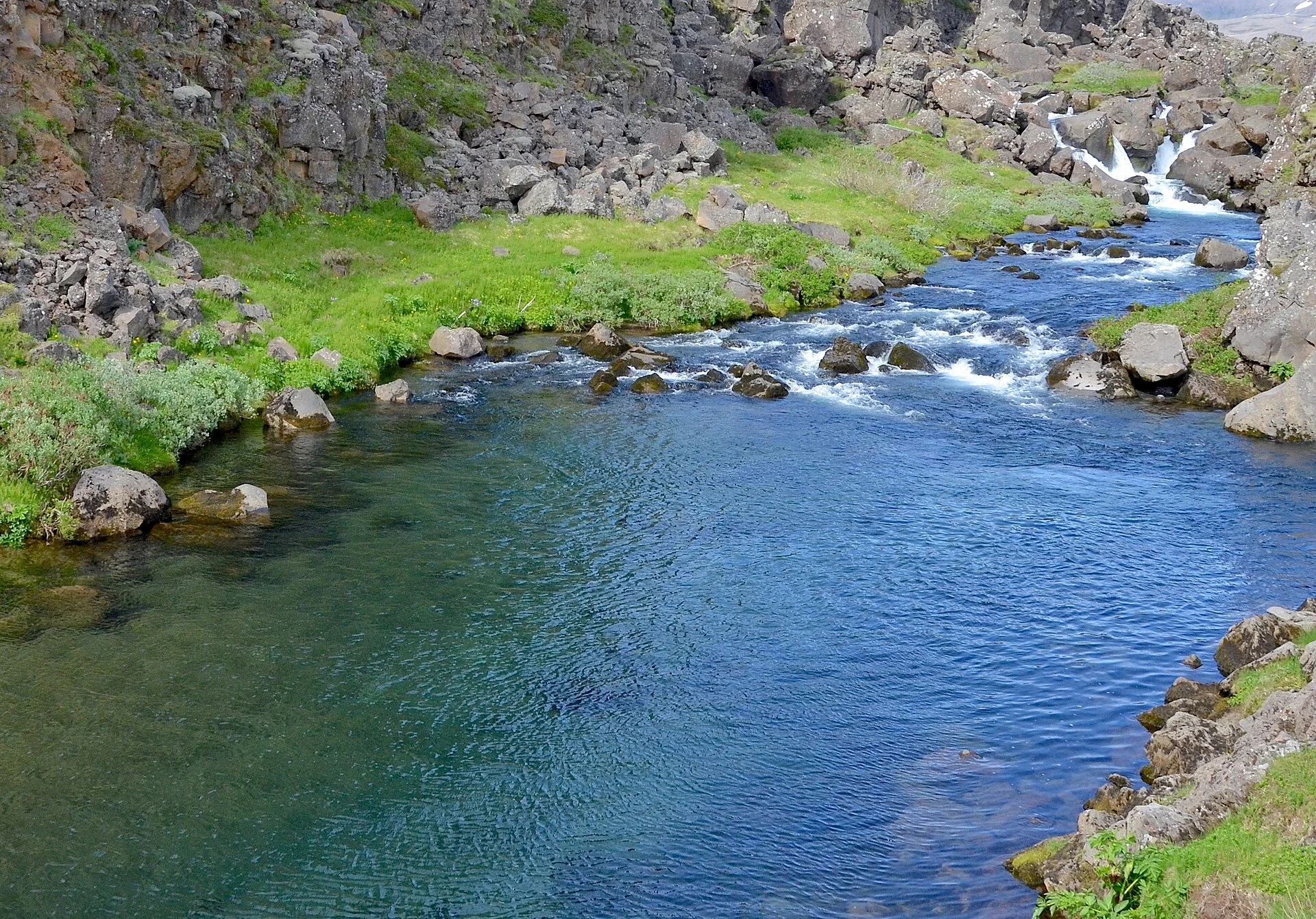
Thingvellir Drowning Pool: Location and Historical Context
Find Drekkingarhylur on the established visitor route and read the park’s factual account of the pool’s place in later legal history.
The Thingvellir drowning pool is Drekkingarhylur, a pool in the river Öxará within the old old meeting area setting. It is a stop on a wider history walk. The facts need care over dates and context. Its later use for punishment should not be treated as the story of the entire Alþing.
Find Drekkingarhylur using the signed visitor route and the park's map. Read its history from the park's account of courts and law enforcement. The source distinguishes early Commonwealth practice from later punishments under royal authority and the Great Judgment. View the pool from the allowed path, keep photos respectful, and avoid graphic retellings or claims that go beyond the record.
Last fact checked: 14 October 2026. This page uses named park sources and avoids an invented re-creation of single events.
Finding the Thingvellir drowning pool
The pool belongs to the river Öxará, not the lake or Silfra. Keep that distinction in mind when choosing a map pin. All three names appear in accounts of the park, but they name different water features. A Silfra booking will not bring you to this pool as its activity place.
Use the park's latest map and local signs to follow the visitor route in the meeting area. The official courts-of-law page names the pool and explains its past use. The park also has a place-name record in Icelandic for the named pool.
View the water from the marked approach. A route beside a river is not an invitation to walk into it or climb down the bank. Water levels and footing vary, and a picture taken in one season does not prove access in another. Current signs matter more than a photo angle.
Do not confuse the pool with Öxarárfoss, the waterfall elsewhere along the river. They can form part of the same wider visit, but each has its own name and account. Keeping the names clear helps when asking park staff about the route or reading a past source.
What primary records show
The park's courts account is the main source used here. It sets out the pool as a place where women convicted under the Great Judgment were drowned. The relevant law is Stóridómur, introduced in 1564 in the account. That date belongs to the legal context, not the founding of the Alþing.
The source makes an important distinction about earlier enforcement. In the Commonwealth, the parties to a case had to enforce its outcome. There was no central power to do that work. The park states that executions and other punishments were not carried out at Þingvellir during that period.
After the transfer of authority to the Norwegian king's officials, the system of punishment became more severe. The pool belongs to this later story. This was not the law at the first assembly. Keep the periods distinct.
Counts of victims need a primary record. This guide does not repeat figures without one. Such numbers appear in travel accounts, but a confident number is not a substitute for a checked source. The park's account is enough to show the pool's past use and the distinction visitors need.
A reference for interpreting the site carefully
Name the feature first. Then check its date and source before adding a claim to a photo. The following record is a reading aid. It does not recreate an event or assign an exact place for each action within it.
- Named feature: Drekkingarhylur, a pool linked with Öxará in the old meeting area setting.
- Historical use: a place of execution by drowning under the later punishment system described by the park.
- Legal context: the Great Judgment, Stóridómur. The park dates its introduction to 1564.
- Earlier-period distinction: the park says punishments were not carried out at Þingvellir during the Commonwealth.
- Evidence limit: the short official account does not justify adding graphic detail or attributing an event to an exact photo point.
Source: Þingvellir National Park, Courts of Law, checked October 2026.
Read the Althing guide to place this later account within the assembly's longer history. The assembly made laws and heard court cases. Public speech was part of it too. The pool is one historic feature, rather than a summary of all of those functions.
Keep the account factual
A place with a serious history does not need dramatic language to explain why it matters. Use the name, the legal period and the official account. Avoid reenactments, graphic descriptions or imagined dialogue. None helps a visitor locate the pool or read its place in the legal history.
The same restraint applies to captions. “Drekkingarhylur in the Öxará river” sets out the photographed feature. A claim that a particular stone or angle marks an exact event needs further evidence. A calm pool today does not prove the past. Nor would a stormy photo prove the opposite.
Distinguish a source's account from a visitor's response. The park provides history account. You can read it without being told what emotion you should feel. On a group visit, allow room for people to read the signs or move on at their own pace.
If you discuss the site with children, keep the account short and factual. Decide beforehand whether it suits the group's interests. The wider meeting grounds provide other ways to read law and public life, so this stop does not need to dominate a family visit.
Follow the signed visitor route
Plan this stop within an old meeting area walk. Use a route that matches your mobility and the day's conditions. A map may show the pool near another feature while leaving slopes, path surfaces and latest restrictions unclear. Ask park staff if an approach is uncertain.
The official parking page distinguishes P1 at Hakið, P2 at Efri-Vellir and P5 at Valhöll. Choose by your full route, rather than by the pool alone. You still need to return to your arrival point or meet the transport plan you booked.
Keep the route's water features distinct. Lake Þingvallavatn provides the wider setting. Silfra is a fissure activity site. The pool is a river pool with history account. A direction to one does not provide access instructions for the others.
The tectonic plates guide explains the faults around the visit. That geology helps you read the terrain but cannot date the pool's legal use. Keep the physical setting and past evidence side by side without treating one as proof of the other.
Respectful taking photos at Drekkingarhylur
Take photos from allowed ground and keep the route clear. Do not stage a scene that imitates the past punishment. Avoid moving beyond barriers to remove people from the frame. A factual view of the water and surrounding rock is enough to document the place.
If you share a photo, name the pool by its actual name. Keep past claims tied to the park's source. Do not label it as the location of an event in the Commonwealth period when the official account says otherwise. A short accurate caption is more useful than an elaborate story without evidence.
Use the season honestly too. The photo on this page documents the named place on its capture date, not latest footing or water levels. A summer photo cannot tell a winter visitor which path is clear. Checking access is still part of the visit, regardless of how calm the image looks.
If you want a guided account, compare Thingvellir tours by their time and focus at the park. A Golden Circle stop may not cover every historic feature. Ask about the walk's content rather than assume that Drekkingarhylur is included because the route names Þingvellir.
Frequently asked questions
Is Drekkingarhylur the same as Silfra?
No. Drekkingarhylur is a pool linked with the river Öxará and past law enforcement. Silfra is a water-filled fissure near the lake's northern end, used for separately arranged activities. Use the exact place name on maps and in questions to park staff. Directions or bookings for one do not cover the other.
Did executions happen here during the Commonwealth?
The park's courts account says punishments were not carried out at Þingvellir during that period. It distinguishes that earlier system from later, more severe law enforcement under royal authority. Keep the pool's use within its correct later context. The pool should not be used to describe all periods of the Alþing.
Is the pool a place to enter the water?
Treat it as a historic stop on the marked visitor route. The allowed path is the place to read the signs and view the feature. Do not infer safe or allowed water entry from its appearance. A still photo cannot show water flow, footing or restrictions that apply on your visit.
What should a photo caption say?
Name Drekkingarhylur and the Öxará river, then link any past claim to the park's account. Avoid graphic reconstructions and exact event locations that the source does not prove. Include the capture season or date when it matters. A photo records an older view, not current access or path conditions.
Verdict on the Thingvellir drowning pool
The Thingvellir drowning pool is best understood as one factual stop in a much longer old meeting area history. Use the park's distinction between legal periods, stay on the signed route and keep images respectful. Return to the park overview for the wider visit and nearby hotel choices if you plan to stay overnight.
Use the Thingvellir National Park pronunciation guide to recognise local names. It can help when reading signs or asking about the route.
.jpg)