
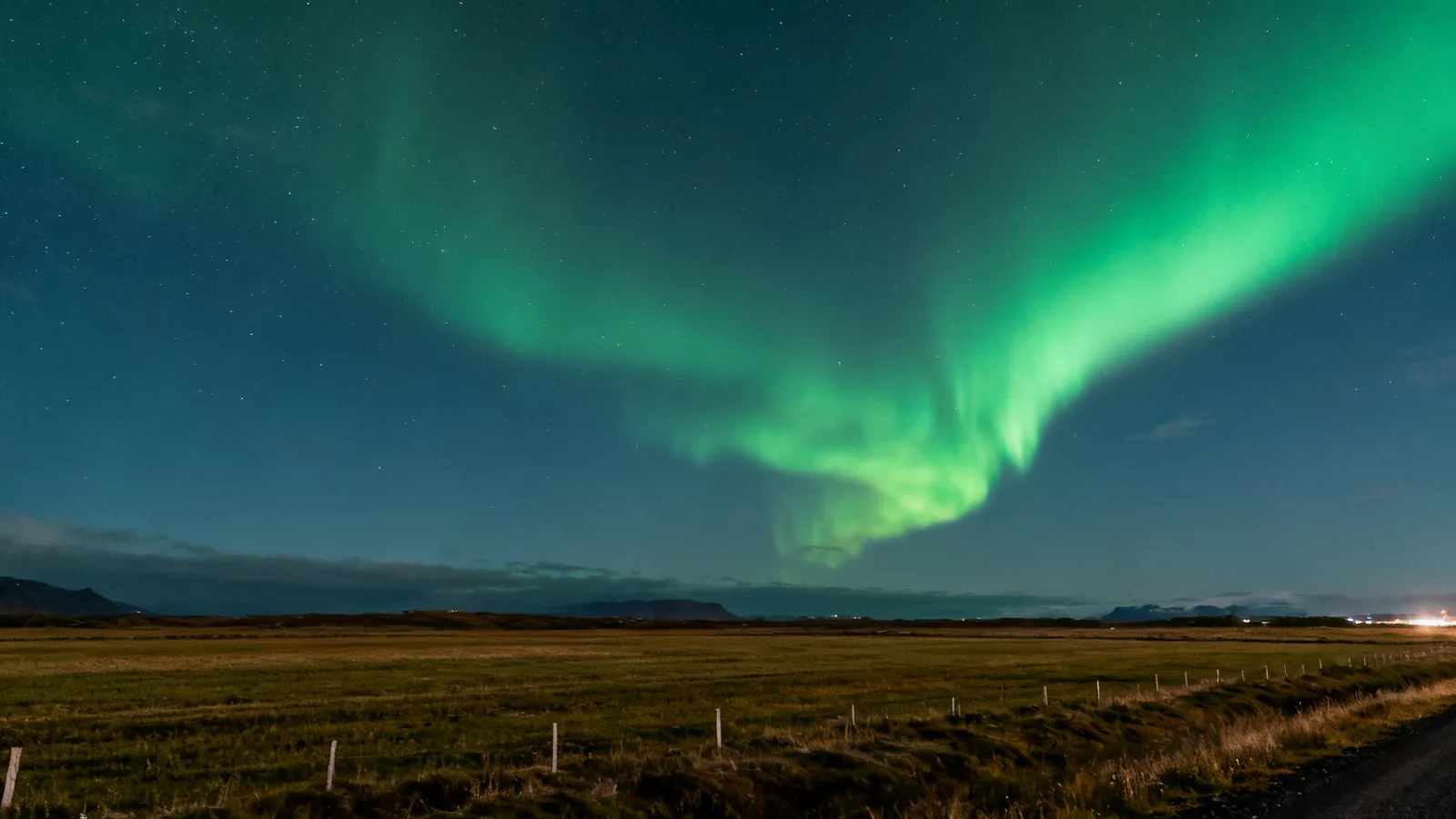
Northern Lights Thingvellir Guide: Access and Planning
Plan an aurora outing at Thingvellir with official sky forecasts, a lawful stopping place and a clear return. Check cloud, roads and current park access.
This northern lights Thingvellir guide starts with the sky, then checks the road and return. Northern lights at Thingvellir need more than a dark-looking park photograph. The sky must be dark enough and at least partly clear, with auroral activity. The road and a lawful place to stop must work too. Plan the return before leaving, and do not treat an aurora forecast as a promise of a sighting.
Use the Icelandic Met Office's aurora forecast for the sky, and separate road and park checks for access. Choose a permitted stopping place before the night drive. Keep warm clothing and a return plan ready, without relying on open visitor buildings. If cloud or current conditions do not fit, shorten the outing or choose another plan rather than drive between uncertain roadside stops.
Checked: 15 October 2026. The Met Office aurora page explains darkness, cloud and its activity forecast. Use Umferðin and SafeTravel for the travel side. This guide reports no current sighting and gives no probability or guarantee.
Northern lights Thingvellir: plan the viewing night
The Met Office says an aurora view requires dark and partly clear skies. Read the cloud layer for the time you intend to be out. Its map legend describes green as cloudy and white as clear. Move the time control to the relevant date and hour rather than judge from the first frame shown.
Read the auroral-activity indicator alongside the cloud layer. A higher activity forecast does not remove cloud. A clear patch does not guarantee a visible display either. Keep those conditions distinct instead of choosing one favourable number and treating the rest as settled.
Check the time represented by each display
The source says its sun and moon times are for Reykjavík. Do not turn those into an exact observation of the sky at a chosen park viewpoint. Use them as context, then check the actual date and place. A missing data field is not evidence of zero activity.
This page does not name a guaranteed month or minute. Darkness and the actual sky matter more than a fixed travel slogan. If you are planning an ordinary daytime park visit, keep it worthwhile without a night display. An aurora should not be the only reason the stay or route works.
Confirm park and parking access for the night
Use the park's current parking details and local notices. Choose an established visitor stopping place, then check that it is available for the intended visit. This guide does not establish unrestricted overnight access to every lot or path.
The parking page describes a payment valid on the day of payment. Do not infer an overnight camping right or a cross-midnight exemption from that wording. The parking reference explains the daytime lot choices. Confirm any material night-use question with the park before relying on the place.
A dark verge is not a viewing site
Do not stop on an unsuitable roadside shoulder because the sky has brightened. Use a lawful place and keep the driver focused on the road. A passenger can watch the sky during the drive. The driver needs a safe place to stop. Avoid a sudden turn.
The park overview gives the land-visit context. Marked routes and barriers still matter at night. Do not walk toward water or onto fragile ground for a clear foreground. The absence of visible people is not evidence that an area is open.
Roads and cold are separate from the aurora forecast
Check the complete drive and the return period. A clear sky is not a road-condition report. Read current weather warnings as well as the cloud forecast.
If conditions no longer suit the drive, change the plan. Do it before the next leg. Do not chase a clear patch farther away.
Standing still can feel different from walking in the same clothes. Have layers, gloves and a hat ready, with a dry spare where practical. Do not depend on an open cafe or exhibition building. The visitor-centre guide describes daytime service schedules, not a late-night warming service.
Keep the party's limit clear
Decide how long you are prepared to wait and when you will return. Make that a group decision before everyone is cold. A forecast is a reason to assess the conditions, not a duty to stay outside until something appears. Keep enough energy for the drive home.
For a rural night, compare nearby hotel bases by the route and room, not an aurora photograph. A hotel can be a useful bed. It cannot guarantee the sky. Confirm late arrival and the road approach if they affect the outing.
A daytime viewpoint is not automatically a night walk
The Öxarárfoss guide describes a named land visit. Do not use its daytime appeal as proof that the same walk is suitable in darkness. Steps and water need more attention when visibility is poor. Choose a simpler permitted viewpoint if that better fits the party.
The same applies to photography. A bright processed image may show more than the eye saw at the time. This guide does not present generated imagery as an observed display. Use the real sky and current access as the basis of the decision.
Before an aurora outing
- Sky: Read the cloud layer and activity forecast for the intended hour.
- Roads: Check the complete journey and return.
- Place: Establish a lawful stopping point and current park access.
- Clothing: Prepare for standing still without an open building.
- Return: Agree the group's finish point and keep the driver rested.
- Fallback: Accept a shortened trip or no sighting.
If you prefer organised travel, compare the land-tour formats and then the exact night product separately. A daytime excursion does not include an aurora hunt because the supplier also sells one. Read the selected booking's weather and cancellation terms.
Frequently asked questions
Does a high activity forecast guarantee northern lights?
No. The Met Office also identifies darkness and partly clear skies as requirements for a view. Read cloud cover for the intended time alongside the activity forecast. A favourable number does not remove cloud or establish what will be visible from one exact place. Keep the trip worthwhile without a promised display.
Are all park facilities open for an aurora visit?
This guide establishes no such service. The visitor and service centres publish daytime schedules with exceptions. Confirm the facility you need and do not rely on an open building at night. The outdoor stopping place and road access are separate checks, even when the daytime park visit is familiar.
Can you wait beside the road when the lights appear?
Use a lawful, suitable stopping place. Do not make a sudden stop on a shoulder or block a route because the sky changes. Plan the viewing arrival before leaving. If that place is unavailable, continue to a safe alternative rather than treat every dark stretch of road as a viewpoint.
Does a rural hotel promise a sighting?
No. A room can give you a convenient base, but it does not control cloud or auroral activity. Choose it for ordinary room and route needs first. Read any alert service as a service description, not a guarantee. A night photograph in a gallery does not establish what you will see during your stay.
Verdict: northern lights Thingvellir planning
Use this northern lights Thingvellir guide to decide whether the sky and access justify a visit. Plan northern lights at Thingvellir as a weather-dependent outing with a clear stopping place and return. Use the Met Office for the sky and current authorities for road and park access. Keep warm and accept a change of plan when the conditions do not fit. No booking or forecast can promise the display.