
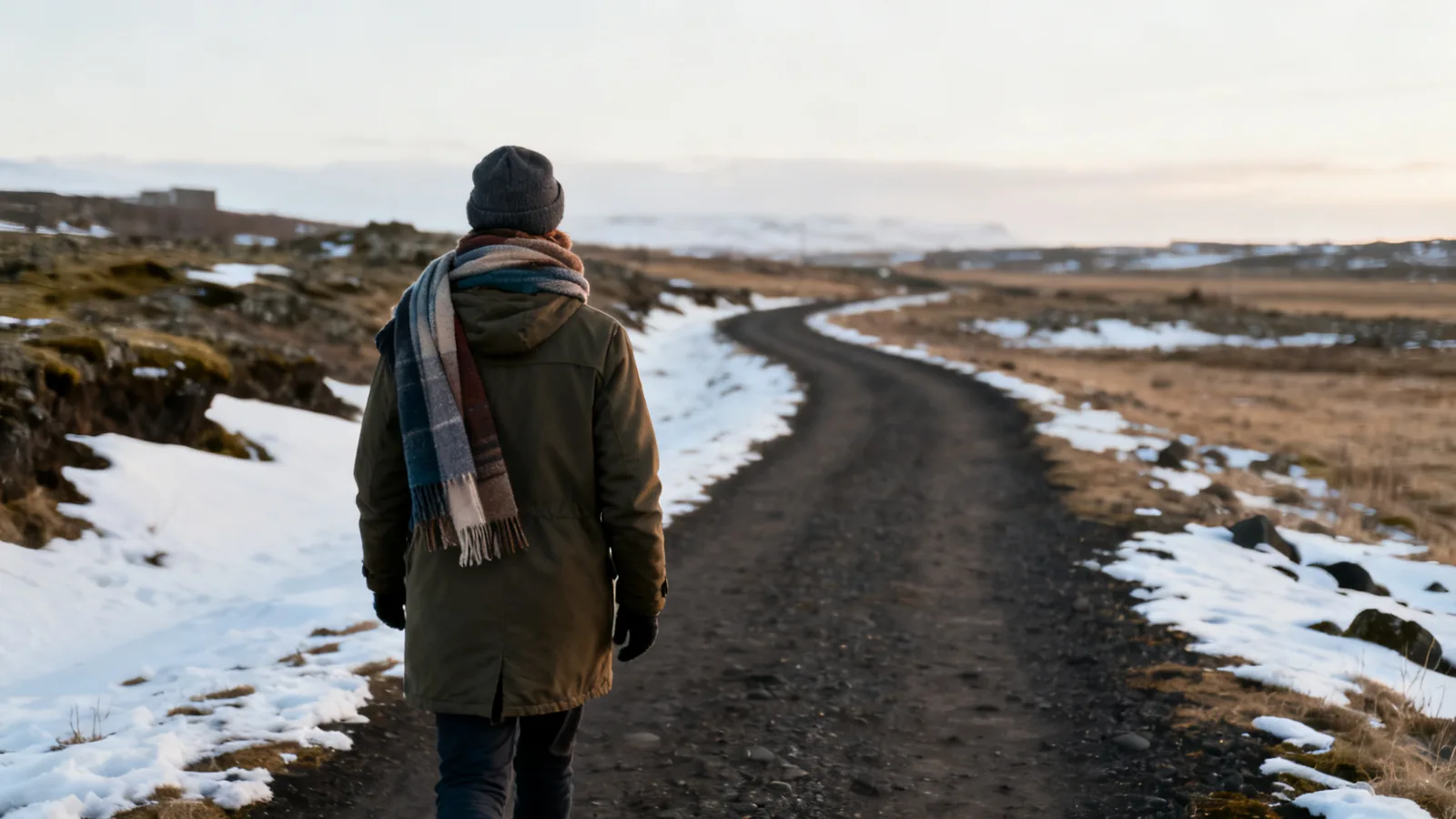
Thingvellir National Park in Winter
Plan a winter Thingvellir visit around current roads, a manageable marked walk and usable light. Check lots, centre hours, clothing and the return.
Thingvellir National Park winter planning starts with the road and the exact walk you want. A snowy photograph cannot tell you whether a path or crossing is open today. Choose a marked route with a return everyone can complete. Keep the main visit in usable light. Leave room to shorten the plan.
For a winter Þingvellir visit, read current weather and road reports before leaving. Choose the arrival lot for a short, defined walk rather than try every mapped sight. Follow local path notices and keep steps and the return in the time budget. Visitor buildings have daytime schedules. An indoor stop, booked activity or overnight stay needs its own current check.
Facts checked: 15 October 2026. Use the Met Office, Umferðin and SafeTravel close to the trip. The park's hiking page supplies maps, while its service pages supply named facility hours. This guide does not claim that every path is open or that any winter date is suitable for driving.
Thingvellir National Park winter: check access before leaving
Read the official road report for the complete drive. Look at the return period as well as the first leg. If you are staying at a rural hotel, check its final approach too. A good road into the region does not establish that every connecting road fits the plan.
Read the forecast warnings and the report's legend. Do not guess a road state from the colour of a map line. Conditions at your Reykjavík room are not enough to judge the inland visit. A popular year-round destination can still need a different plan on the actual date.
Keep the rental agreement beside the route
The vehicle's allowed roads and driver terms come from the rental agreement. A four-wheel-drive label is not permission to use every road and does not remove a closure. Follow the current report and the contract rather than a suggested shortcut whose suitability you have not checked.
If the road no longer fits, change the outing before setting off. Contact a booked supplier or hotel and read the relevant terms. A confirmed booking proves the booking; it does not establish the route. Do not keep a drive simply because it was part of the first holiday plan.
Choose one main winter walk at Þingvellir
Use the park overview to decide whether the main interest is the assembly story or the visible rift valley. Those interests can share a route, but they need enough time to read and look. Choose a few named places rather than try to reach every feature from the first car park.
The official assembly map is a location reference. It cannot show today's ice or the state of a crossing. Keep a shorter return available and choose it while the party still has time and energy. Turning around can be the sensible completion of a visit.
A short distance can still take time
Steps and slopes can be slow when the surface is slippery. The return may be uphill even if the outward walk felt easy. Add stops for signs and the needs of the least confident walker. Do not treat the fastest person's pace as the group's time budget.
Our walking guide separates main-area routes from longer former-farm outings. A wider trail network is not simply an extra loop to add late in the day. If you choose a longer route, prepare that outing with its own return and current condition check.
P1, P2 and P5 create different winter arrivals
The park's parking page places P1 at Hakið and the upper end of Almannagjá. It places P2 east and below Öxarárfoss, with P5 nearest the church and Silfra. Read those as location facts, not a ranking of which lot is safest in every winter condition.
Choose the lot for the first task and the return. At P1, an outward route into the lower grounds can require a climb back. For a waterfall-led stop, check the actual path from P2. For a lower-area walk or activity, identify the correct P5 plan before relying on it.
Complete parking payment before the walk
Read the parking reference and current lot instructions. Use the correct vehicle category and registration, then retain the ticket. Cold weather is not a reason to skip the process or guess a plate from an old rental email.
Parking and activity check-in are separate tasks. Leave time to get from the car to a booked group. If the activity has an exact meeting area, use the supplier's precise directions. A general park pin does not establish where to stand with the required gear.
Read old closure notices as dated evidence
The park's Closed Trails notice is dated 14 February 2024. It describes damaged river walkways and icy routes, including the short connection from the Valhöll area toward Almannagjá. Those are facts about the notice and its date, not a live list of every closed path today.
The notice is useful because it shows how a familiar mapped connection can be interrupted. It does not justify assuming the same closure continues forever. It also does not prove reopening merely because time has passed. Use current signs and the park's latest details for the exact connection.
Do not create a bypass across the grounds
If the planned route is closed, choose another established path that is open. Do not cross fragile ground or river edges to preserve the original loop. The assembly area includes low historic remains that can be hard to recognise under snow. A shortcut can damage what the visit is meant to see.
Keep the revised route simple. If it needs more steps or a longer return than the party can manage, shorten the visit. A broad open view can be worthwhile without reaching every marked point. The goal is a useful visit that fits the actual access.
Put the main visit into usable daylight
Choose the important walk first, then place meals and indoor stops around it. Do not spend the brightest usable period driving to extra sights if the park is the main interest. Keep enough light for the return to the vehicle, including any steps or slow section.
This page does not publish one sunset time for the whole winter. The date matters, and cloud can affect how the visit feels. Check the actual day rather than copy another month's itinerary. A twilight symbol is not proof that every path will be easy to see.
Use a clear point to shorten the day
Agree a return point before setting off. It can be a time or a route decision that the whole party understands. If the walk has taken longer, take the shorter established return. Do not wait until everyone is tired to decide where the car is or how far remains.
If the park belongs within a winter Golden Circle day, remove an extra local stop before rushing this walk. The three main sights do not require every extra attraction. Keep the road back in the timetable. It needs time of its own.
Winter clothing is for walking and standing still
Wear adjustable layers with an outer layer suited to the forecast. Keep gloves and a hat reachable before leaving the car. You may stand still reading a sign or waiting for the group after walking. A warm vehicle can give a misleading impression of the next exposed stop.
Use footwear for the actual path surface. The park's dated closure notice recommends traction in the icy conditions it describes. That is useful context, but it does not make every route suitable with any traction device. Read the current conditions and follow the gear's instructions.
Fit the gear before the outing
Try unfamiliar clothing or traction at home rather than learn its fit on a cold path. Make sure the outer layer fits over the warm layer and the hood does not block your view. Use shoes you have already walked in. A new item is not automatically a better choice for the visit.
Keep dry spares protected and available. If clothes get wet, do not assume they will dry between stops in the car. The Golden Circle clothing guide treats the whole outing, including the ride and waiting, as the packing task.
Hakið and Leirar are different winter services
Hakið is the visitor centre with the Heart of Iceland exhibition by P1. Leirar is the service centre by the campsites and road junction. The centre guide explains their tasks. Choose the right place before setting navigation or asking about a facility.
The official pages list regular winter hours of 09:00 to 17:00 from November through March, checked October 2026. They publish separate holiday exceptions. Read the actual date and service. A cafe, permit desk and exhibition are distinct questions even when they share a building.
An indoor visit is not an unlimited weather fallback
The exhibition can add interpretation when it is open and the visit fits. It has its own admission and time needs. Do not arrive at closing expecting the full experience. A paid ticket and an outdoor walk should each have a realistic place in the day.
Neither centre is established here as a late-night shelter. Plan evening visits without assuming the doors or toilets remain open. If an exact service is essential to the party, confirm it before travel and keep an alternative. A map icon alone cannot answer the timing question.
Choose winter sights for their open approach
At the assembly grounds, read a short account before arriving so a few features have context. The Althing guide explains the old meeting story. Snow can make low remains less obvious, so do not expect every feature to look like a summer photo.
For the rift valley, use the geology guide to understand what the faults show. You do not need to step into an unmarked gap to see the process. A dramatic crack is part of a wider zone. No photo can fit the whole boundary into one narrow view.
The waterfall and church need their own checks
The Öxarárfoss guide covers its distinct approach. Check the current path and return rather than assume the waterfall is a simple extension from any lot. If the path does not suit the party, choose another open view. The closest angle is not compulsory.
The church guide separates exterior recognition from interior access. Do not make the building an assumed warming stop. A church shown on a map is not a statement that it is open to enter during a winter walk.
Silfra is a separate winter activity plan
A booked Silfra activity has its own guest conditions, forms and gear fitting. Read the winter snorkeling guide and the exact supplier's current terms. Do not fit the activity into a short sightseeing gap just because it lies within the same park.
The supplier may sell a city-transfer version. It may also sell a meeting-point version. Select the one you actually need. A rural hotel night may not fit a Reykjavík pickup. The drive to the activity and the walk from guest parking also belong in the arrival budget.
Issued gear does not cover every part of the day
You still need clothes for the journey and the time before fitting. Follow the supplier's own underlayer and spare-clothes instructions. A general winter packing list cannot establish individual suit fit or permission to participate. Resolve those points before the booking date.
Keep the activity's return point clear too. A guest who arrives with a car needs to know where that car will be after the trip. Someone using a transfer needs the actual drop-off plan. Treat the activity and transport as one connected plan rather than two assumptions.
Guided versus independent winter visits
An independent visit gives control over the walk length, but puts the road and parking tasks on you. Use the current reports and your actual ability to manage the conditions. Do not judge from another person's summer trip or the fact that the route appears on many itineraries.
The Thingvellir tour guide can help when you want interpretation or organised travel. Read the park stop and the supplier's alteration policy. A guided vehicle can still be delayed or the route changed. An all-year product is not a weather guarantee.
A private day still has boundaries
Exclusive transport can agree a slower walk or a simpler route, within the booked hours. It does not buy entry to a closed path or unlimited waiting. State the main need before the quote, including steps or a shorter route for a member of the party.
A shared day may suit the standard stop plan well. A smaller vehicle does not itself prove more time at the park. Ask about the actual walk and meeting plan. Choose the product whose timetable fits, rather than expect the guide to rebuild a shared route after pickup.
Overnight plans in winter
Compare nearby hotel bases by the actual approach road and arrival needs. A rural setting can suit a slower visit, but may require a different route from the shortest line an app suggests. Read the hotel's directions and the current road report together.
Check meals and late check-in separately. A room ticket does not reserve dinner, and breakfast does not solve a late arrival. Keep the hotel contact available. If conditions alter the plan, contact the property early rather than drive solely to protect the booking.
Camping uses the active designated site
The park names Nyrðri-Leirar as its year-round campsite and warns that snow or thaw can close parts of the ground. Read the camping guide and current park instructions. A daytime parking payment does not create an overnight pitch.
Confirm the winter arrival area and the services the tent or vehicle needs. Do not use the presence of a summer campsite on a map as permission to stay there now. The route to the site and the ground conditions are separate from the wish to camp near the next morning's walk.
A flexible winter park-day model
Keep the car return on the same plan
Mark the chosen car park on your saved map before the walk. P1 is at Hakið above the main rift walk. P2 is east of the Öxarárfoss area, while P5 is by Valhöll. They are separate arrival points, not three names for one place. These locations follow the park's official parking guide, checked October 2026.
If the group splits, agree which car park everyone will return to. A one-way walk needs its own pickup plan. Do not let a map pin for the next sight replace the actual return point.
Start with the road check, then choose the exact arrival and one main walk. Add the exhibition only when its hours and the group's interests fit. Plan food as a separate stop. Keep the return before adding an extra local attraction or an evening activity.
- Before departure: Read the complete road and weather reports.
- On arrival: Check local signs and confirm the chosen route.
- Main visit: Use a marked walk everyone can complete.
- Indoor option: Confirm the correct centre and service hours.
- After the walk: Reassess the return before adding another stop.
- If delayed: Remove extras or shorten the route while the plan still works.
This model is a sequence, not a promised timetable. Conditions and the actual walk decide the length. Keep the visit useful even when it becomes shorter. Understanding a few park features can be a successful day without reaching every marker on a static map.
Set a point at which you will shorten the walk or head back. Share that plan with the whole party before you leave the car. It can be a named path junction or a chosen sight, rather than a vague distance. Keep the drive home in the plan too. A short walk can still be followed by a slow return journey.
Frequently asked questions
Is every main path open in winter?
No blanket opening claim is made here. Static maps locate the routes, while current notices and local barriers govern access. The park's dated closure page shows that ice and damage can interrupt familiar connections. Check the actual path you need. Keep a shorter marked return rather than assume the whole loop is available.
Does the February 2024 notice still mean the same paths are closed?
It establishes what the park reported at that date. It does not by itself prove today's closure or reopening. Use the latest details and signs for the exact connection. If a crossing is essential, ask the park before relying on it. The age of a notice cannot settle present access in either direction.
Can the exhibition replace an outdoor visit in poor weather?
It can be an indoor interpretation choice when it is open and the arrival is practical. It has separate admission and stated hours, with holiday exceptions. Do not rely on it as an unlimited late shelter. Check the road and named service before travel, then give the exhibition its own realistic visit budget.
Does a guided tour guarantee the full park stop?
No. A guided day still depends on roads and local access, and the supplier can alter the route under its terms. Read the exact park walk and meeting plan before booking. A smaller or private vehicle does not remove closures. Choose transport for the party's needs while keeping a flexible visit in mind.
Verdict on Thingvellir National Park winter planning
For Thingvellir National Park winter travel, choose the current road and a manageable marked walk first. Give the return usable light and keep indoor services on their own schedule. Treat old notices as dated evidence, then follow present restrictions. A shorter well-used visit is better than forcing every mapped sight into a difficult day.